
Retroactive Revocation and Penalty Refunds: The Court of Appeal on Enforcement Costs
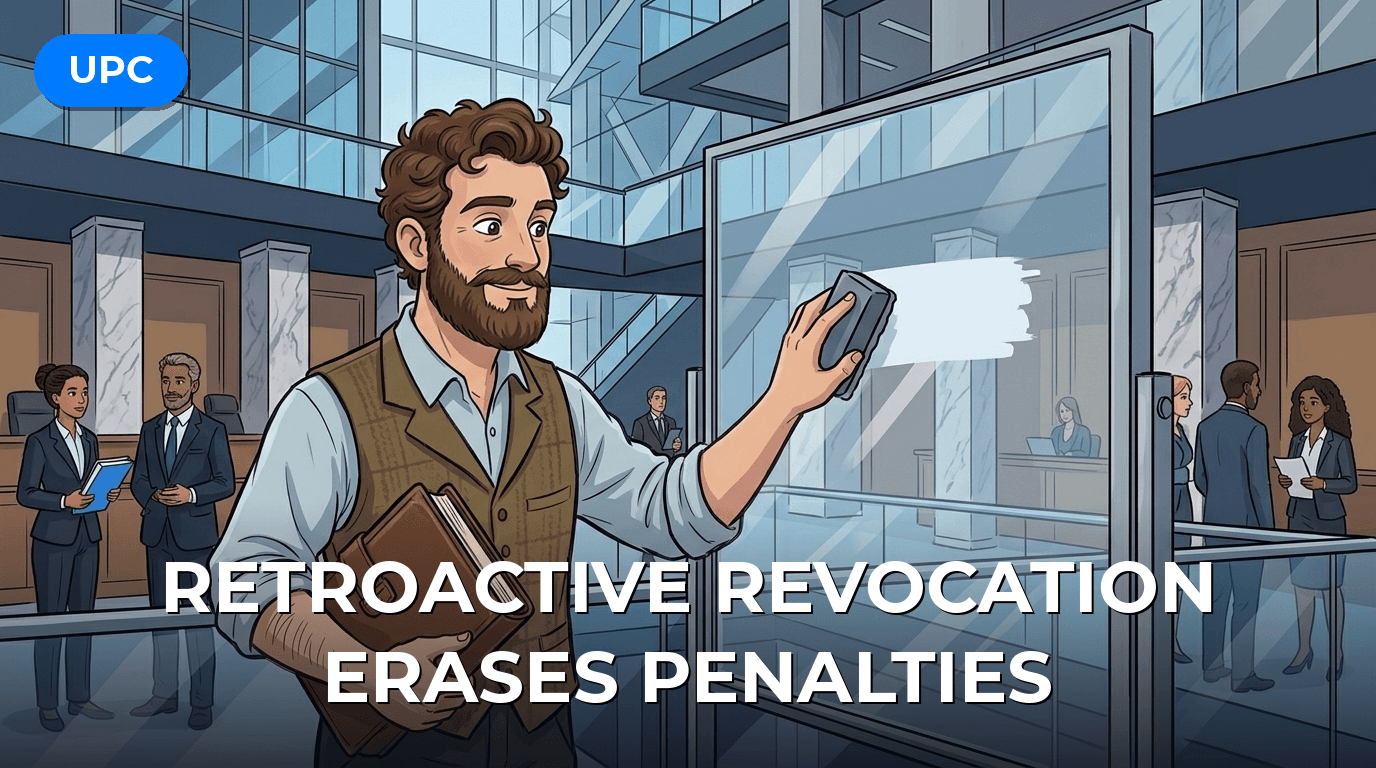
The Court of Appeal clarifies that revoking an injunction of the Court of First Instance retroactively revokes associated penalty orders. Claimants enforcing pending appeal bear a significant cost risk if the merits decision is overturned.
The doctrinal framework governing the retroactive effects of revoked injunctions at the Unified Patent Court has rapidly solidified since the Court of Appeal order in Nanostring v 10X. In UPC-COA-0000028/2026, the panel extends this logic to enforcement proceedings and penalty payments, clarifying how the retroactive revocation of a merits decision of the Court of First Instance unwinds subsequent penalty orders and dictates the allocation of enforcement costs.
Why did the Court of Appeal revoke the Mannheim penalty order?
The dispute arose after the Mannheim local division ordered the defendants, Kodak, to pay a penalty of EUR 1,720,000 for breaching an injunction concerning EP3511174. Kodak appealed this penalty order. While the enforcement appeal was pending, the Court of Appeal issued a separate decision on the merits setting aside the underlying Mannheim decision, finding that Kodak did not infringe the patent because it could rely on a private prior use right.
Applying its earlier Nanostring precedent, the Court of Appeal confirmed that the revocation of an order granting an injunction has retroactive effect. The revoked order must therefore be regarded as never having had any legal effect (paragraph 19). Consequently, the retroactive revocation removes the legal basis for any subsequent decision ordering the payment of a penalty. The panel emphasised that this applies even if the penalty decision relates to alleged breaches of the injunction that occurred prior to the revocation.
How does Rule 370.6 RoP determine the value of enforcement appeals?
With the penalty order revoked, the panel had to determine the value of the enforcement proceedings to allocate costs. Kodak argued the value should match the EUR 1,720,000 penalty it was ordered to pay. The claimant, Fujifilm, argued for a value of EUR 1 million, representing its interest in the ancillary orders.
The Court of Appeal anchored its analysis in Rule 370.6 RoP, which states that the value reflects the objective interest pursued by the filing party at the time of filing the action. The panel clarified that this refers to the interest of the party that initiated the action before the Court of First Instance. Crucially, on an appeal brought by the defendant, the value remains the interest of the claimant in having the decision upheld. It does not shift to the interest of the defendant to have the decision set aside (paragraph 22).
Furthermore, the panel held that the amount of the forfeited penalties cannot represent the claimant's interest. Penalties are payable to the Court and contain a coercive and punitive element. Instead, the relevant metric is the claimant's interest in the proper fulfilment of the obligations that the penalties serve to incentivize. Since Kodak did not dispute Fujifilm's assessment of this interest at EUR 1 million, the Court set the value of the proceedings at that amount.
Can a defendant be penalized for delaying compliance with a revoked order?
Fujifilm argued that each party should bear its own costs under Article 69 UPCA, alleging that Kodak caused most of the enforcement costs by frustrating the process and being too late and incomplete in its compliance.
The panel rejected this argument. Because the underlying Mannheim decision must be regarded as never having had any legal effect, there is no legal basis to assess whether the defendant's behaviour unnecessarily contributed to the costs of the enforcement proceedings (paragraph 26). The Court reasoned that where a defendant was retroactively not obliged to comply with any orders at all, it cannot be said that it was too late or incomplete in doing so. The panel reiterated that enforcing a decision pending appeal is done at the risk of the enforcing party, a principle supported by Rule 354.2 RoP.
What must practitioners evaluate before enforcing an injunction pending appeal?
This order confirms that enforcing an injunction of the Court of First Instance before an appeal concludes carries significant financial risk for the claimant. If the merits decision is overturned, the claimant will not only lose the injunction but may also be required to refund any collected penalties and bear the defendant's legal costs for the enforcement proceeding.
Furthermore, claimants cannot rely on a defendant's alleged resistance or delay during the enforcement phase to mitigate cost exposure. The retroactive revocation of the underlying order effectively shields the defendant from cost sanctions related to non-compliance. Litigators must therefore weigh the immediate commercial benefit of enforcing an injunction against the potential cost liability that may materialize if the Court of Appeal subsequently revokes the patent or finds non-infringement.